Exploring the Perks and Applications of an Aluminum Foundry in Modern Production
Aluminum foundries play an important duty in modern production. Their ability to produce lightweight yet long lasting components is especially valuable in sectors such as automotive and aerospace. The use of cutting-edge spreading strategies better enhances effectiveness and accuracy. As the need for sustainable production methods expands, the relevance of aluminum foundries remains to increase. What particular advantages do these facilities offer, and how are they shaping the future of production?
The Versatility of Aluminum in Manufacturing
Aluminum, a light-weight metal, has become a cornerstone in modern-day manufacturing due to its remarkable versatility. This adaptability permits light weight aluminum to be utilized in numerous markets, ranging from automotive to aerospace and building and construction. Its capability to be easily formed and molded makes it suitable for generating complex elements and structures - aluminum metal casting. Aluminum can be alloyed with other steels, enhancing its properties and broadening its applications.
In the automotive industry, light weight aluminum is preferred for its strength-to-weight ratio, adding to sustain effectiveness. In aerospace, its rust resistance and lightweight nature are essential for aircraft efficiency. In addition, aluminum's recyclability adds environmental benefits, lining up with lasting manufacturing methods.
Trick Advantages of Using Aluminum Foundries
Aluminum foundries provide substantial advantages in manufacturing, mostly as a result of the lightweight nature of light weight aluminum, which boosts product performance and effectiveness. In addition, these foundries present an economical strategy to production, allowing services to minimize expenditures while maintaining high-grade criteria. Understanding these benefits is necessary for business seeking to enhance their manufacturing procedures.
Lightweight Product Conveniences
Light-weight products play an important function in modern-day production, and light weight aluminum foundries exhibit the benefits of making use of such materials. Aluminum offers an exceptional strength-to-weight ratio, enabling producers to create parts that are both easy and durable to handle. This lowers the general weight of items, which can improve efficiency in different applications, from automobile to aerospace. Additionally, the lightweight nature of light weight aluminum contributes to improved fuel performance in lorries, as lighter components require less power to relocate. In addition, light weight aluminum's resistance to deterioration prolongs the lifespan of parts, making them excellent for lasting usage. Overall, the advantages of lightweight products like aluminum are substantial, driving advancement and efficiency in making processes across multiple sectors.
Cost-Effectiveness in Manufacturing
While many products are available for manufacturing, the cost-effectiveness of aluminum foundries sticks out as an essential benefit in production. Aluminum is fairly cost-effective and bountiful, decreasing basic material costs substantially. Additionally, the performance of modern light weight aluminum foundries permits for high-volume production with marginal waste, adding to lower total expenses. The fast solidification procedure in aluminum casting not only accelerates manufacturing but likewise reduces power intake compared to various other steels. Additionally, the recyclability of aluminum adds to its cost-effectiveness, allowing suppliers to reuse scrap material without jeopardizing top quality. In general, the economic advantages of utilizing aluminum foundries make them a compelling option for manufacturers looking for to maximize manufacturing prices while keeping high standards of high quality and efficiency.
Applications of Aluminum Foundries Throughout Industries
Aluminum foundries play a crucial role in various markets, particularly in aerospace and automobile markets. Advancements in the vehicle sector have resulted in lightweight components, enhancing fuel efficiency and performance. Likewise, aerospace element manufacturing take advantage of aluminum's strength-to-weight proportion, making it important for innovative airplane designs.
Automotive Sector Innovations
A considerable change in the direction of aluminum in the auto sector has actually changed automobile design and production processes. This lightweight material improves gas efficiency and reduces greenhouse gas exhausts, straightening with modern ecological standards. Aluminum foundries play an essential function in creating components such as engine blocks, chassis, and body panels, advertising a structured manufacturing process with accuracy casting methods. Technologies in light weight aluminum alloys have further enhanced strength and longevity, making vehicles much safer while preserving performance. Furthermore, the recyclability of aluminum supports sustainability efforts, permitting the development of closed-loop manufacturing systems. As car manufacturers accept these improvements, the integration of aluminum proceeds to drive development, fostering the production of lighter, much more effective vehicles that meet consumer needs and regulative needs.
Aerospace Part Manufacturing
The aerospace sector significantly counts on aluminum foundries for the production of vital elements that hop over to these guys demand both lightweight attributes and high stamina. Aluminum alloys, known for their superb corrosion resistance and tiredness strength, are ideal for manufacturing parts such as airplane frames, engine components, and architectural supports. Foundries use sophisticated casting methods, consisting of die spreading and investment spreading, to accomplish exact geometries and surface area coatings vital for aerospace applications. This process not only boosts efficiency but additionally adds to sustain efficiency and general airplane safety. Furthermore, with the expanding fad toward sustainable production, light weight aluminum foundries are embracing green techniques, even more strengthening their duty in the aerospace field. As need for cutting-edge aerospace solutions rises, aluminum foundries will continue to play a crucial function in element manufacturing.
Innovative Strategies in Aluminum Spreading
While traditional approaches of light weight aluminum spreading have actually long been fundamental in manufacturing, current improvements are improving the landscape. Methods such as 3D printing and additive production are changing the production process, enabling complex geometries that were previously unattainable. These advancements make it possible for rapid prototyping and reduce lead times, improving performance in item advancement. Additionally, pressure die spreading has actually seen renovations, with boosted automation and precision, bring about higher-quality components with much less waste.
The usage of computer system simulation software helps with much better mold and mildew layout and procedure optimization, minimizing defects and enhancing return (aluminum foundry). Advancements in alloy formulas have actually likewise arised, leading to products that boast exceptional strength-to-weight ratios and improved efficiency features. These strategies reflect a shift in the direction of even more receptive and dexterous manufacturing settings, positioning aluminum foundries to satisfy the demands of modern-day industries while keeping competition in a rapidly developing market
Environmental Influence and Sustainability of Aluminum Foundries
In recent times, lots of light weight aluminum foundries have started focusing on ecological sustainability as a core element of their operations. These facilities aim to decrease their carbon footprint via various campaigns, consisting of the recycling of aluminum scrap, which greatly decreases energy usage and waste. The reusing procedure requires roughly 95% much less energy compared to key light weight aluminum production, thus decreasing greenhouse gas exhausts.
Innovations in foundry technologies have led to enhanced power effectiveness and lowered discharges throughout casting procedures. Numerous foundries are likewise embracing environment-friendly techniques by utilizing renewable resource resources, such as solar and wind power, to satisfy their energy needs.
Additionally, the implementation of strict ecological policies has actually urged foundries to purchase cleaner technologies and waste monitoring systems. By concentrating on sustainability, light weight aluminum foundries not just boost their operational efficiency but likewise add favorably to the environment, aligning with worldwide initiatives to promote lasting manufacturing techniques.
Future Fads in Aluminum Foundry Innovation
Exactly how will developments in modern technology form the future of aluminum foundries? Arising technologies such as automation, fabricated knowledge, and additive manufacturing are set to change aluminum shop procedures. Automation will certainly improve performance, decreasing labor prices and reducing human mistake. AI-driven analytics can enhance manufacturing procedures, making certain much better high quality control and anticipating maintenance.
The combination of additive manufacturing can facilitate the manufacturing of complicated geometries that typical methods might battle to accomplish. This will make it possible for foundries to produce lighter and much more detailed designs, dealing with developing sector needs.
Regularly Asked Inquiries
What Is the Normal Life Expectancy of Aluminum Cast Products?
The normal lifespan of aluminum cast items differs, normally ranging from 10 to half a century, relying on variables such as ecological conditions, material quality, and get redirected here application. Correct maintenance can significantly extend their resilience and performance.
Just How Do Aluminum Foundries Make Sure Quality Assurance?

What Are the Safety Measures in Aluminum Foundries?
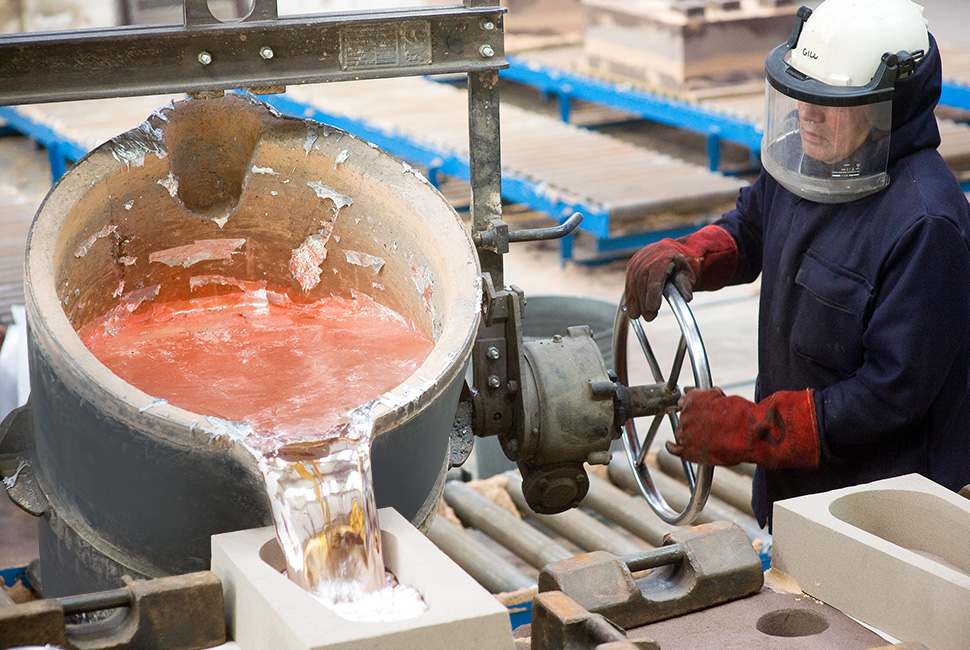
Aluminum foundries carry out precaution such as appropriate air flow, personal safety equipment, normal safety training, and tools maintenance. These methods intend to minimize threats connected with liquified metal, guaranteeing a safer working atmosphere for employees.
Can Aluminum Be Recycled After Casting?
Yes, aluminum can be reused after casting. The go right here reusing process keeps its top quality, making it a sustainable selection. This ability to reuse light weight aluminum greatly lowers energy intake and ecological impact, promoting a round economy in production.
What Skills Are Required to Function in an Aluminum Foundry?
Operating in an aluminum factory needs skills such as metalworking, expertise of casting procedures, attention to safety procedures, analytic capacities, team effort, and knowledge with running machinery. These competencies ensure effective manufacturing and premium end results.
Aluminum foundries supply significant advantages in manufacturing, mainly due to the lightweight nature of light weight aluminum, which boosts product performance and efficiency. Lightweight materials play an important duty in modern manufacturing, and light weight aluminum foundries exhibit the benefits of making use of such products. While many materials are available for manufacturing, the cost-effectiveness of aluminum foundries stands out as a key benefit in manufacturing. Aluminum foundries play an important role in producing components such as engine blocks, chassis, and body panels, advertising a structured production procedure via precision casting methods. In addition, with the expanding fad towards sustainable production, light weight aluminum foundries are embracing environment-friendly techniques, even more strengthening their duty in the aerospace sector.